Bria Bloom
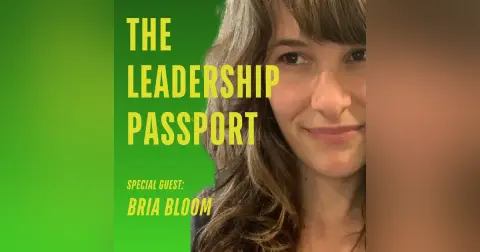


In this conversation, Bria Bloom discusses her journey from being an unschooled child to becoming a passionate advocate for self-directed education. She explains the principles of self-directed education, addresses common misconceptions, and emphasizes the importance of structure and community in this educational approach. Bria also shares insights on cultural differences in education, the challenges of measuring success in self-directed learning, and practical steps educators can take to incorporate these principles into traditional school settings. The conversation concludes with reflections on the importance of finding supportive communities and the complexities of parenting in the context of education.
Takeaways
- Bria Bloom is a passionate advocate for self-directed education.
- Self-directed education centers on the autonomy and agency of young people.
- Education is the sum of everything a person learns.
- Self-directed education derives from self-chosen activities and life experiences.
- There are many misconceptions about self-directed education.
- Structure in self-directed education can vary greatly by family and child.
- Cultural perspectives on education differ significantly around the world.
- Measuring success in self-directed education is complex and multifaceted.
- Unschooling can lead to surprising outcomes in socialization and learning.
- Finding supportive communities is crucial for parents and educators.
Host
Kevin Fullbrook is an international school leader with 25+ years of global education experience across Australia, China, and the Middle East. As host of The Leadership Passport Podcast, Kevin dives into the stories, strategies, and insights of education leaders from around the world. With a passion for inclusive leadership, student agency, and sustainable school cultures, he brings thoughtful conversations and practical takeaways for educators, aspiring leaders, and anyone interested in the future of learning.
Connect with him on Instagram (@kevin.fullbrook) and LinkedIn (Kevin Fullbrook)
https://www.linkedin.com/in/kevin-fullbrook-33034b8b/
https://www.instagram.com/kevin.fullbrook/
0:06 Welcome to the Leadership Passport. I'm excited to welcome my guest today, Bria Bloom. Bria grew up unschooled and is now a parent of two. She's a passionate advocate for self-directed education and children's rights and loves to work and play as an SDE facilitator. She's the Co founder of Flying Squads and is a coach, a writer and a facilitator. Welcome, Bria. So I'm wondering if we can start you can tell us a little bit about yourself and the work that you're doing. Yeah. So as you know from this podcast, I'm sure in your work, there's so many different types of alternative education as you really advocates for this one kind that centers on the autonomy and agency of young people and is built on the foundation of understanding how humans have learned for thousands and thousands and thousands of years before we invented school basically. So that is our focus.
1:03 And then there's a bunch of different people doing this in different ways. There's homeschoolers, which in the US at least, we call unschoolers a lot of the time. Of course there's arguments over all of these terms because terms are imperfect at best, but a lot of people self identify as unschoolers. And then there's centers and schools that also follow this philosophy, co-ops, micro schools, all those kinds of things. And all of those people would be under this umbrella where we're building an alliance of like resources and support and connections. We can advocate and make this more accessible for more families. So what? What drew you into this work?
1:45 What prompted you to devote a big part of your life to it? Well, I was an unschooler myself growing up, so it's interesting. I don't know how international your audience is. We do support internationally. At the Alliance. We are now like an international organization, but in the United States we have a lot a couple key people who really helped drove drive the unschooling movement and the this type of homeschooling early on. So John Holt was one of them. And my dad read John Holt. He also read as Neil's Summerhill book, which I know a lot of people are familiar with as well internationally. And those were kind of the two people who are writing about this in this context.
2:34 And he read those and then he kind of raised us in that fashion for the most part. So I identify as an unschooler growing up. And then when I ran into, as do people including Peter Gray, who's a huge free play advocate, wrote the book Free to Learn, which talks about a lot of these ideas. I ran into him at a conference and just kind of pitched an idea and got involved. And I had kind of gotten not away from my unschooling roots, but like I was in early childhood because that's a place where still in the United States, not always, but a lot of times you can allow the kids to play and be themselves and engage in that way. So I really wanted to be in a place where that was an option. And I did want to eventually start some sort of alternative school, although I hadn't been exposed to the types of schools that I've been exposed to now, which I would base based my ideas on.
3:29 But then once I started with ASDI, like all the childhood memories and what was really like baked into me and made me feel really happy about my upbringing, really good about it, came out again through that work. I was like, oh, this is where I meant to be. This feels really good. I really want to help other kids and families have access to this. So for anyone who might be new to this concept, how do you explain self-directed education in kind of plain language, especially to people who might be skeptical or, you know, be more familiar with traditional kind of school systems? Yeah, so self-directed education was actually coined and created by that team back in 2016. But it's a concept that's built on the way, especially from Peter's research and other researchers. He's an evolutionary psychologist who studied hunter gatherer cultures.
4:26 And how? Because that was us for thousands and thousands of years. That was humanity, right? So how they raise their children even now, but also in the past historically, and how those children learn from their traditions. So it's built on this deep history of humanity and this is just a way to repackage it for the century we're in now for the ideas we have based on school, for how education has been for the last however many years since school was invented and people have been really bought into school. So it's just this repackaged idea that was already there. So I like to start with that, but as he has its own definition, and we kind of start with the definition of education because education has really become synonymous with schooling for a lot of people. So we think of the word education, we think of the word school.
5:14 And as he really wants to get away from that, education doesn't have to mean school, and school actually doesn't have to mean what we what we think of it as. Now, a school can be so many different things, but that's a different topic. So for education, we like to define that first so people know what we're working with. Our working definition of education. Education is the sum of everything a person learns that supports them towards living a satisfying and meaningful life. So then moving on to self-directed education. self-directed education that derives from the self chosen activities and life experiences of the learner, whether or not those activities were chosen deliberately for the purpose of education. You left for a second.
5:59 Do you want me to pause or are you good? No, that's OK. That's OK. Thank you for thank you for continuing on. SO, so I guess leading on from that a little bit, what, what are some of the most common misconceptions that you see or hear about self-directed education and learning? Yeah. And I want to expand a tiny bit on that definition because that's very, I don't know, short tidbit of a definition and not really what it looks like in life for me. And I know we're not there yet in society, but for me, like self-directed education means we live our lives and we understand that learning derives from that. There's a lot of learning that happens just in conversations with people just trying to manage relationships, conflict, learning how to cook in your home, watching your parents read stories, oral storytelling, like playing video games.
6:50 Like all these things amount to our education. And I think we do have to be more deliberate in that having access to people who can teach us things to having mentors, to having classes, just having a lot of people who know these skills and being exposed to those skills because there might be something you don't know you want to learn if you're just, you know, in your own family unit without exposure to these things. We have to be really deliberate, especially because most of our access to quote UN quote, education is in schools. So if you're not going to school, you have to be more deliberate and finding more opportunities. But eventually, personally, I'd like to get to the point where we understand that we live life and we learn from that. Look, you mentioned the word deliberate before and I like that because a lot of people assume maybe self-directed learning is a lot more unstructured. So what are some of the kinds of structures and things that sit behind being a bit more deliberate? Yeah, it is an interesting topic that always comes up. People think self-directed education or unschooling or any of those things where kids have choice means no structure. I think it really it does highly depend on the family, on the kid.
8:13 So basically you are creating your own structure as a family, as an individual and that can look so many different ways depending on who you are. So I had I had a really like eclectic way my schedule looked as I when I was a kid and as I got older and I really like built that and chose that for myself. And when we had our first kid move in with us full time, he's my stepson. So he moved in full time long time ago. He was young. That kind of like eclectic building of a schedule didn't function for him.
8:56 And I was like, this is not the kind of unschooling that works for this child. It worked for me as a kid. That doesn't mean it works for him. It's a very different disposition. We're in a different city, a different situation. So he really needed to go to a school every day, like a self-directed school every day where he knew he was going to this place, he knew what their structure was. Of course there's like so much freedom in their day, but it's like predictable and that who's going to show up, what offerings they have when they go every day, when they get picked up every day when morning meeting as things like that. So that felt like a easier container for him to build what he wanted to do with his day. So it really, really varies.
9:38 I mean, sometimes you have families where both parents have to work and then you have to build structure based on what's accessible to that family. Sometimes you have kids who want things blocked out. They're like, oh, I want to do this in the morning and then have my afternoon time be free or I want to make sure I go to this school or center like these two days a week. So I know that's really structured for me. And then the other three days a week, we see friends, we go on field trips or we stay home. So it really it's more of a build your own structure is the difference. But it doesn't mean it's just like, free for all the time. And I want to go back a little bit. You mentioned now that your organization works internationally.
10:22 So I'm wondering if there's some interesting things that you've noticed in this kind of work across cultures and across countries. Yeah, and it is really hard because I am only steeped in the culture I'm in, so I don't like to speak for other cultures and countries. But a lot of the things we've really learned and part of the reason we didn't want to be international at first is that the situation with how compulsory schooling is, especially in Europe, a lot of European countries is very different than United States, United States, everything single state allows you to homeschool legally. And that's not true. And a lot of other countries, a lot of other countries, you have to send your kid to school.
11:05 And that's a very different reality for parents who are like, I don't want to send my kid to school. And I don't know what the options are. Some of these places allow SDE schools, so that's always an option. But a lot of times you have to pay. And if you can't pay, you're out of luck or there isn't one in your area because they're still pretty scarce. So I think that's the biggest difference. Another difference that is very true, I think in places like like Africa, like South America, with like a deep cultural history and tradition, is that we have decided globally, the Western society I think has decided that school is the best way to get a leg up.
11:49 And because school is the best way to get a leg up, that actually is kind of a self fulfilling prophecy. So we go in and we say, well, these poor third world countries like their kids just need school that will help them get a leg up and then be able to work in the global, global economy or whatever it is. And maybe that's true in that now they can enter that job force that looks that way, but that doesn't mean it's preserving their culture and their needs and their areas and villages. And I'm not going to remember it, but there's a really great documentary of schooling the World by Carol Black is a really great one to watch if you want to learn more about this.
12:30 It is not my area of expertise, so I'm speaking very generally here. And then we've also have a couple pieces written where someone has told a story about how they went in to a village, this was in India and start, they were like, oh, these people need education. So they start building this school and then after a few years, they were told by the villagers, but the elders, like, our kids can't communicate with us anymore. They can't tend our crops. They can't like, engage in our traditions. Like you are ruining our culture. Basically. You're changing it into this other culture to make them fit into the society that you've decided is better.
13:14 So it's this really tough thing where I think in theory people think they're helping, but what they're doing is deciding 1 cultural way of being and way of working is better than an. Yeah, that's really, it's really interesting to, you know, think about how we've just superimposed this model of what we think is best in education really right around the world and the the kind of the arrogance and hubris that goes along with that. Yes. Yes. So sort of changing tack a little bit in schools and, and leaders and teachers, you know, think about how do we know it's working?
13:57 How do we know that kids are learning? You know, what's the, what's the impact that we're having? What's the evidence that shows that? What? What does that? How do you answer that question in in self-directed education? It's funny, a friend that was talking to me the other day, friend and colleague, and he was like, what research studies do we need in self-directed education? And I was like, honestly, I think we need to take on schoolers and self-directed kids who go to self-directed schools and give them standardized tests and then show everyone their test scores. Because I know plenty of kids, myself included, who didn't do any of the academic studying and we got totally fine or great test scores. And even though I think we actually need to get away from standardized testing overall, it's something very tangible and very academic that I think would prove to a lot of people who want to see those numbers that like, oh, even if they're not in school doing these things 24/7, not 24/7, but you know what I mean? Even if they're not in school all the time studying for these tests, they're still going to be able to understand and pass these tests.
15:02 And I think that's a really easy metric to prove. But I also don't believe standardized test scores show us that much about society and learning and long term success. So it's almost like we're trying to play that game just to prove it. But then also I want to wipe away standardized testing in general personally. So, but it is interesting. I think it's part of the problem here with self-directed education and kind of illustrates that, is that it's hard to prove because what we're trying to prove, I think what we're trying to prove is will your kids be OK? Will they get jobs? Will they be happy and healthy? Will they be able to contribute to their communities? Will they have good relationships? Like I think that's what we're trying to prove. And that's like a long study with a lot of subjective variables.
15:55 And I think there's other things we can study like the test scores, like if they get into colleges, what jobs they have, but it doesn't tell us the overall well-being or satisfaction of a person's life overall doesn't tell us about their mental health. So there's so many things, variables that go into this that I think are really tough to study. So in terms of like proving it, I would go the more standardized metrics way, just check those boxes, make people see that like it can be done, they'll be OK. But in terms of what I actually think we need to know, I think it's just really hard to design those studies. You need like 2 decade, 3 decade long studies, right, that follow these people. And then you need to control for family and other factors that really, really change how people end up. And, and I think you're exactly right when you, you know, standardized testing is very narrow and at scope and you know, it misses out on just this, a lot of this richness that you talk about in all of these really wonderful deep learning and, and dispositions that we want for our young people.
17:04 So I love how you framed that. So to take that, I guess a little step further, are there any examples of learner outcomes? So for people that are unschooled, as as you said, that surprise people, so kids that go through young people that go through this unschooling experience, what are the things that surprise people about the either the intended or unintended consequences of of of this? It's a good question and I think a lot of it actually has to do with the misconceptions piece as well. Even just the word homeschooling. I wouldn't tell people and when I went to college that I was homeschooled until they knew me and then I'd be like, Oh, I was homeschooled and they were like, you don't seem homeschooled. Nothing about you like that is not you seem like the least homeschooled person ever.
17:58 I'm like, Oh, you you mean because I can socialize, because I can keep a quote UN quote academically, like because I can function really well on my own. Like what? What preconceived notions? And I think it is the socialization piece. So I think that's one thing that surprises people if they allow themselves to be surprised, if they allow their preconceived notions not to get in the way of how they're viewing a person, which is why I like didn't tell people 1st and like get to know me and then you can find out. But yeah, I think that's one thing. Like how capable and social and really like able to integrate into society these people are. I think another thing is just like the breadth of jobs that are available.
18:48 I it's easy to think that if you don't do math for what is it, 12 years of your life, at least in the United States, you won't be able to catch up later and get a job that requires math. That's just not true, especially like there's been, it's anecdotal, but there's definitely been evidence that these people can catch up with math and six months of studying after not doing it for the 1st 10 years or more of their lives. So these things that we think if you miss out on this opportunity to learn it, like when you're younger, you won't be able to do it. It's just not true for most subjects. Language, language is 1 where that's that's very accurate for that.
19:31 There's this key window for being really good at learning language, for speaking it natively, but that's before you're even in school. So that's not even school related. But yeah, I think people being able to do these things so quickly and like really catch up to where their peers are is another surprise. And then just the breadth of opportunities available to them, even when they didn't go through what people consider the norm, is another thing that's surprising. And you mentioned there's some of the preconceived notions and misconceptions. So I certainly as, as you were saying that, I thought back to some previous roles I've had where I've conducted in traditional schools, the admissions kind of interviews and, and things for students coming in. And when I've seen on the paperwork before, I've met the student that they've, they might be coming into grade 9 or grade 8 or something like that.
20:26 And they've never been to school. So they've been homeschooled. They're coming to school for the first time. And I did have a, a preconceived notion in, in my head of what this child would be like that they might not be well socially adjusted. They might be behind in certain academic areas. And just in this little, you know, anecdotal evidence, I was wrong in every single case of those students. And they were, whether that's by chance or design, I, I don't know, but they certainly what I did notice about those kids, yes, they did maybe have some gaps in academic knowledge in, in places, but what they, they far excelled in, they were, they knew how to learn like they were curious and they were good learners. They, they perhaps didn't have all the content, but they, you know, they were very independent learners and self-directed that, that they could just pick things up and, and, and go away with them, you know, in six months time, you know, there was no difference.
21:29 So that for most of them they were, you know, well advanced of their their peers. Yeah, I think you've hit the nail on the head there. And if you have that curiosity and desire to learn, the other things are easier. They're easier to like catch up on. They're easier to delve into. I also, I don't like to present an idealized version of this. I like to be careful. I don't think that it makes like better humans. I don't even like that term better humans. Like I, I want to recognize that there's a lot of room for difficulties, for mistakes made and mistakes made are, are OK, but for like big mistakes made. I think it's really, you have to be really available mentally, emotionally and very intentional as a parent in this situation because you're not, it's, you can't just send them to the school and be like, OK, that's the thing we're doing now. I cannot think about it.
22:30 You have to really see what's happening for your kids, see if they're getting what they need, see it like what kind of social situations they need to be in, Seek those things out for them. It's different in every city and every family. And like, the biggest issue I have is that there's just not that many kids. Like, my oldest is almost 15 now. The kids are in high school especially it was self-directed education and unschooling. That's when parents panic the most is when kids get to high school. So it's more often that kids will jump to school, jump ship and jump to school at that age. So there's even less teenagers. So in order to access kids socially like they're in high school, it's so hard to do a thing and find people and friends and access when everyone is in the school system, mentional school system.
23:23 So that makes it really hard and you have to really seek things out and work harder. There's definitely accounts, and we're seeing this in the US at least more often. People who their parents call them unschoolers, I would not call this unschooling, but to each their own. And they felt like they were kept from school, like they were not given the tools they wanted or needed or access that they wanted. And I think that if you're a young person wants to go to school, keeping them from school is not unschooling because unschooling involves allowing your kid to make the choice. So if you're saying I don't believe in school, I don't want you to make that choice. Now you're controlling your kid in a different way. So if your kid wants to go to school, you should let them try that. So there's definitely cases where this has gone really wrong.
24:10 And if we look at the amount of kids percentage wise compared to the amount of kids in conventional schools where they're suffering emotionally, mentally, even academically when they get to college or careers, like there is an astronomical percentage of kids in conventional schools suffering. So I think it's really easy to take the outliers of unschooling when you're doing an outlier thing and point to them as examples for why you shouldn't do it. But then we forget about the huge percentage of kids and doing the conventional thing who are suffering as well. I just don't think there's a magic pill where everything's going to be perfect for every kid.
24:52 Like, we're still going to make mistakes. But I also think like conventional school isn't doing it either for them. It's not working for everyone either. And you mentioned conventional schools there. So if someone working in a conventional school is listening to some of this and is like fantastic, I want to try some of this. I want to bring elements of this into my classroom or my school. What What is 1 or what is some initial realistic kind of practical steps that that people would do without blowing everything up but taking some steps in this direction? Well here at least you can't blow everything up in the school because you're answering to the administration.
25:35 So it really depends on your school. I actually, if you're OK with this, I, my colleague and I had a podcast with a school teacher who tries to bring these principals in. So I would go listen to that because she's been doing it for years and she also talks about how. You can give it a, give it a. Yeah, give it a. Plug here if you like. So people know where to find it. Yeah, it's Rethinking Self-directed Education as the podcast and the episode was with Sarita, but I don't remember the name of the episode. I can send it to you for the notes if that's helpful. Yeah, great. Perfect. But yeah, she also talks about how like it depends on what your, who your principal is, what your administration is like, who your she is, a teaching partner, who your teaching partner is, who the other teachers are.
26:24 Because if you're doing something so different with all these teachers around you or admin who don't agree with it, that makes it really, really difficult. But I've talked to a lot of people who have taught in schools in different ways about this. And I think the bottom line is how you present your authority to the kids and what your relationship is like with the kids. So even if you can't have free choice, even if you're like stuck with this curriculum and you can just do choice within the curriculum or you're stuck in this classroom, you're stuck on this timetable or schedule, what you can do is change the way you relate to the kids in your class. You can set up your classroom to be like more comfortable. You can have like pillows and couches instead of desks where they have to sit and watch you.
27:15 You can sit in circles and you can really like you can be honest with the kids. Obviously it depends on age, but she talks about elementary school age kids. So I think any kid who's old enough for that school, at least in the US, is probably old enough to understand this. Be honest with them. Like we are in this system, the situation that requires us to do these things. And I actually don't love it either. Like I'm required to do these things too. And I know it doesn't always feel good for you. And we're going to do our best to work within the requirements and have as much freedom for that as possible. And I'm here with you in this. So how can we make this experience the best for all of us within the constraints we have? Just be honest.
28:01 Instead of being the agent of the school, trying to exert authority over the kids, change your role and be a partner with the kids, dealing with the system that we're all in. And I think that's the most important piece is changing your relationship with the kids. Now that's it can be really hard if you don't know how to do I do it. I think some people already have that frame and them and some don't and that's OK. So there's like a lot of unlearning about I think a teacher or adult's role that you need to do and as do you would call that deschooling. So if you look up that term, there's a lot of resources you can find for that. More practical things I've heard of teachers doing like a 2 hour block or session.
28:45 This is usually for older kids. I think that's opt in. That's like the self-directed education session and it's all self-directed education in those two hours. I've also heard that those have been really successful and that the kids do amazing things. They love it more. People keep signing up and admin sometimes shuts them down anyway. So that's really difficult. But I think it's something you could propose depending on where you work and you could try that out as well. And I do have articles from a teacher who did that. He wrote like a four point series on how that worked for him. And I loved how you framed about for educators, you know, kind of reframing their relationship with the young people in the classroom because that can be really vulnerable for people personally and professionally to, to change, to change that. And it takes, it takes a bit of courage to do that for a lot of people.
29:43 All right. Well, look, I've got a couple of quick questions just to to wrap things up, if that's OK with you, a leader past or present that you admire. I have a hard time with this question, but a leader I think I have a hard time with this question because so many leaders like all humans have so many flaws. So I'm like, this person has is amazing and these qualities, but also has all these flaws. I think I would say John Holtz when I'm talking about this work, especially because he was one of the first ones to look at school and be like, why are we doing this to kids and really write about it and be very vocal about it in a time when a lot of people weren't.
30:27 So I think that was pretty brave. And he was known as a really great teacher. So somehow he did all that and was still known in a really great way with the people he was working with. Your favorite book? My favorite book, I would say right now we're talking about this. I love fiction, but I won't talk about fiction right now. My favorite book is The Gardener and the Carpenter by Allison Gopnik. I would say she's another person I admire. She does a lot of research on how babies learn and think, and her book talks about talks about how to be a parent and the ways in which we think we have control as parents when really we have very limited control.
31:10 And she talks all about that in the book. But I really recommend. That, and finally, best advice you've ever received. That's a really hard question. Have you had to answer these questions yourself? Have you asked yourself these? I I I have not. I have not because they are hard questions. Best advice, best advice. I don't think I have a one liner for this, I think maybe I do and I'm not. I'm not sure when or who I received this from but I think find your people is the best advice I have heard and then I have and that is reiterated amongst my like groups and communities so many times. And by that I mean the people who will hold you when things are hard and challenge you and like push back and that you trust them enough to do that.
32:05 And they, they know and trust you enough to do that. So not just the people who are going to be like, yes, yes, people to you all the time, but the ones that will like challenge you and have this like deep support. Fantastic. Well, I think that's a good place to leave things Bria. So thank you so much for for joining me today. I've really enjoyed our conversation. Thank you so much. Yeah. Thank you, Kevin. I appreciate it. Thanks so much for listening to the episode. If you enjoyed this conversation, don't forget to subscribe, like, follow, etc. Drop a comment below to let me know anything you'd like covered in upcoming episodes or suggestions for future guests. You can also connect with me on Instagram and LinkedIn.

