Jen Buchanan
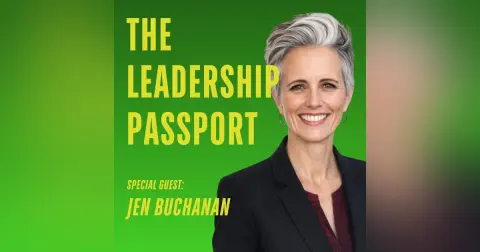


In this conversation, Kevin Fullbrook speaks with Jen Buchanan, the principal of Think Global School, an innovative international school that operates on a unique model of global immersion. Jen shares her extensive experience in education, the challenges and triumphs of leading a school that travels to different countries each term, and the importance of deep learning over educational tourism. The discussion covers the school's curriculum, the leadership skills required in such a dynamic environment, and the essential qualities sought in educators. Jen also reflects on the skills students develop through this immersive experience and the lessons traditional schools can learn from outlier models like Think Global School.
Takeaways
- Think Global School is a unique international traveling boarding school.
- The curriculum is based on place-based learning and global immersion.
- Students must be adaptable and resilient to thrive in this model.
- Deep learning is prioritized over educational tourism.
- Leadership in a global context requires flexibility and trust in educators.
- Building a strong culture is essential for success in a mobile school.
- Parents must be engaged and informed about the school's innovative approach.
- Choosing locations involves careful consideration of safety and learning opportunities.
- Students develop skills in adaptability, ethical understanding, and independence.
- Outlier educational models challenge traditional assumptions about learning.
Host
Kevin Fullbrook is an international school leader with 25+ years of global education experience across Australia, China, and the Middle East. As host of The Leadership Passport Podcast, Kevin dives into the stories, strategies, and insights of education leaders from around the world. With a passion for inclusive leadership, student agency, and sustainable school cultures, he brings thoughtful conversations and practical takeaways for educators, aspiring leaders, and anyone interested in the future of learning.
Connect with him on Instagram (@kevin.fullbrook) and LinkedIn (Kevin Fullbrook)
https://www.linkedin.com/in/kevin-fullbrook-33034b8b/
https://www.instagram.com/kevin.fullbrook/
0:05 Welcome to the Leadership Passport. I'm excited to welcome my guest today, Jen Buchanan. Welcome, Jen. Thank you so much for having me on today, Kevin. I'm truly looking forward to our conversation today. Yeah, me too. I'm really, really looking forward to it. So I wonder if we can start off tell us a bit about yourself, your, your education journey so far and the current work that you're doing, which is which is fascinating. Goodness, I've been in education now for nearly three decades, which is I find that hard to believe. It has been an amazing experience and and truly has led me around the world significant parts of that journey of being in international schools everywhere from Saudi Arabia to Indonesia and now currently we think Global School.
0:53 So this is my second term we think global school. I was an educator with them back in 2016. Seventeen left for some time and have come back into the role. In came back into the role in 2025 as the principal. Fantastic. And now some people might know, many people might not know a little bit about Think Global School, which has a very different model. So I wonder if you can kind of run us through what that looks like? At its most simplest Think Global School is an international travelling boarding school. So every term we we move to a different location. 4 terms a year, 4 different countries, 4 very different experiences on the ground.
1:37 And our curriculum model is one of place based learning. And in each country we, we explore a driving question with our young people and to find ourselves completely immersed in the the country and the culture that we're in. So it's a, it's a very interesting model, yeah. And so how many, what are the kind of ages of students that you have and how many students do you have as a part of this model? Yeah, great question. We are a fully accredited high school, AUS accredited high school for students in grade 11 and grade 12. We were a three-year program. We've just moved to a two year program. So essentially what we have is 15 students will come in each year and we graduate 15 students. So at any one time, there's thirty of us on the ground and we have a team of educators that travel as well. OK, so what's the what's the hardest assumption about education that think is trying to sort of actively challenge what what is it trying to do different and why? Yeah, it's, that's again another interesting question. We say that we're a school for the bravely curious. It's definitely not a model for every young person because you have to be truly adaptable, resilient, jumping on a plane every, every term to go and live in a place that is unfamiliar requires a definite sort of disposition and ability to be able to adapt and respond in these environments. And young people, I would say
3:11 not only bravely curious, but have a real want to be immersed in a world and a deep understanding and ethical understanding of different cultures and people. So the learning really does nurture that, that deep and understanding of what sometimes sometimes can appear to be quite a complex world. And so having that experience on the ground, not only are our young people experiencing learning in different contexts, our cohort of students are also from all over the world. We have, well, I think currently in our thirty students, we have 30 different nationalities represented. So they are an extremely diverse population as well. And you mentioned this before, you've recently moved from like a three-year to a two year program. I imagine some things in terms of your, you know, the way you design either learning and other elements of what you do changes over time.
4:04 Is there something that's sort of embedded in the design of the school that you're particularly proud of? And is there anything you think you're still a challenge is still working on it haven't quite resolved given the kind of different model that you follow? Think the design decision that I would say I'm most proud of now being able to lead this school. This is the work of people that have come before me, is that real commitment to global immersion and is the core structure of everything we do. It's not just an add on. So we didn't go ahead and design A school and then layer a travel component on top of it. The designing started through movement, place and culture from the very beginning. So there are those choices shape everything, how the curriculum emerges, how relationships form, how students see themselves in the world. And with that as well in the other design element that I think often gets missed is that the work really only happens because it is deeply collaborative. Our staff have real autonomy in the design of those learning experiences that respond to the place and the context and, and also the students they have in front of them. As I said, the the student population changes quite significantly each year and you have to, as a leader, have a level of trust in your educators. It is essential in a model like this. You can't centralise every decision when literally your classroom is places around the world. Yeah.
5:29 And I want to dig into that a little bit more in terms of those some of those leadership skills and dispositions. But you mentioned this before, a sort of global immersion. So when you're you're talking about their learning takes place all around the world, how do you make sure that that deep kind of learning takes place as opposed to kind of educational tourism, which, you know, a lot of, you know, in my experience anyway, in international schools, international field trips feel more touristy than than really deep learning experiences. Beautiful question. Coming into this role as principal, one of the most important things I've noticed is the intentionality of the work and being OK, being comfortable, really slowing down and anchoring our learning in place so our students aren't just passing through these places, as you say, with that educational tourism lens or as observers or or as consumers. Then they're not there to collect experiences. They're engaged.
6:32 They're there to engage in those real questions, real people, real communities. And when I think about the day-to-day at Think Global School, the end of the school day doesn't end at a kind of a 334 o'clock. The bell goes, we will raise home. And partly that's because there really isn't a clear line between our school time and lifetime. We are on the ground. Our students are in community in very ordinary and human ways. You know, they're going to the local gym in the evenings, they're navigating public transport, they're finding places to live, they're learning how to exist respectfully in places that maybe are new to them, and they're the moments of real learning. They're practicing their independence, their social awareness, their adaptability in real time.
7:19 Also another big component of the program, which is again, something we see a lot across schools all around the world, is that commitment to our service learning. And so in each country, we do have that opportunity to engage in in service learning. But what's key with this serving learning service in country is that the experiences that the students have, they take that home and they carried it forward in a project in their own country. So the work is not just a kind of a one off experience. We're in country and we're going to go and help at the with a local organization. Yes, that is part of it, but it's the learning part that then can be applied into a real world context of a project of choice back in their own home country.
8:05 So there's, yeah, I think there's a couple of things that we have in place to make sure we don't fall into that kind of eco tourism. And we're just travelling and we're definitely not on a Contiki tour. We're there's deep learning happening on the ground. Very good. Very good SO. I'm wondering for, you know, people that might be struggling a little bit to wrap their heads around exactly what those kind of learning experiences look like. I'm wondering if perhaps even from last term. What are some examples? Run us through what a day or a week might look like for students or staff or for the organization. And it's a really key point that you said there for some of our our learners, because I think one of the hardest assumptions that we tackle as a, as a, as a learning environment, as a school is that we challenge the idea that learning needs to be controlled in order to be effective. So we we don't have traditional classrooms. That's the first thing.
9:03 And people kind of just look at me curiously and just go, but how can you be a school? We don't have a building, we don't have classrooms. And when you think of traditional schooling as well with timetables and predictability and fixed outcomes and fixed schedules, a lot of that is a little bit more flexible in our environment. So if I look at we've just come out of Mexico and I'll walk you through the term and it might give a bit of a clarity and understanding for if any listeners. We're an 8 week term on site. Our staff arrive a week ahead of term and do the prep work. We, we, we scope out our environment, we do what our risk assessments, we work out where our safety zones are, how we're going to, to operate.
9:48 We go through the the curriculum and the learning as we spend a week of intentionality with just our staff ahead of our student arrivals. At the same time, our students are online and they're doing a deep dive into the country they're about to come into. They do an online learning week before they arrive in country. Then it's seven weeks on the ground, our students arrive and it is our whirlwind of activity. The week is structured around 2 days of our Global Immersion modules. And so our global immersion models will have a driving question contextual to the country that we're in. So in Mexico, we've just done a module around activism and the the arts. It's a thriving art scene and our students were working alongside artists and studios learning about printmaking.
10:35 They collaborated on a mural, so that was a beautiful piece of learning. And then another group were out there studying at No Botany and immersed in in different experiences for for two days a week and on the ground with guest speakers in the field. So 2, two days of the global immersion. Then we have a model as well where students are doing their personal projects. So following a design thinking framework, the students are encouraged to find an area of passion, something that interests them. If they're new into the school, they'll do smaller projects each a term base. They build up that capacity to really learn independently, to have that autonomy of a choice through smaller projects in their first year. And then in the second year, they'll take that project as a deep dive into a mastery project that they follow along for the full year, resulting in a, they do a research piece of an essay around that.
11:28 They do a capstone at the end of the year at our symposium and they present their learnings and their findings of their mastery project. Then we also have our whole being program. We have a when we look at our young person, in order to thrive, there has to be opportunity to come and just to spend time in place. So we have around the world, it might be an equivalent to a PhD program, a well-being program. And we have ours uniquely designed for the skill set you need to be able to travel around the world. And then on top of that, there's other projects there getting ready for university preparation. As mentioned earlier, we have our service in country preparation.
12:11 So it's a very rich, it's a very fast and dynamic program, but lots of independence in there. And then there are a couple of moments during the class as well during the week as well where we have explicit teaching because some of those skills that you need for in the field, you need to have that opportunity to, to have that explicit instruction and learning ahead of time. So we do have a traditional English class and a traditional math class as well. So we can take a deep dive into to some of those skills that are required. And I want to come back to some things you mentioned before about leadership and, and leadership from yourself or others. It looks very different in this kind of model and, and wonder if you can talk a little bit more about that coming from a, you know, I'm assuming a more traditional school settings into this type of school setting having to lead in very different ways.
13:00 I wonder what some of the the challenges or learning for yourself have been? Oh goodness. Many, Kevin. Many I'm Each term I'm also arriving at a place that's unfamiliar to me. In a few days time, I'm jumping on a flight to Mumbai and our school will be there for two months. So India here I come this Saturday and like our students and our staff, I'll also be navigating different cultural norms, new logistics, new rhythms. I think I've repacked and packed my suitcase about four or five times in just trying to understand what I'm going to wear on the ground that is culturally appropriate and still maintains a a sense of professionalism.
13:43 It is just I go through all of this myself and what I find in country in order to be able to lead well, I need to take time at the beginning of term just to ground myself. So I generally spend a day just getting to know my environment. I'll be checking into an Airbnb that'll be my home for the next two months, get to know my little area and just ground myself ahead of the, the, the arrival of everyone on the ground. And I found as well, I guess just slow down, slow down to listen, to observe, understand who I am with where I am. And being able to do that, just being able to slow down allows me to arrive and just be fully, fully present. Another big one for for leaders out there, You have to be able to let go of routine or the illusion of routine in moving school like this.
14:40 Routine has to be negotiated each time we arrive in new place. You can't prepare for every variable when your campus literally shifts every few months and not only shifts, shifts to a completely different country somewhere in the world that you might never have been to yourself. And so we might do a bit of a deeper dive into this as well with some other conversation pieces here. But when we talk about culture in schools as well, in order to have a school that moves so much, building that culture is so imperative to the work, you know, shared values, common language, relationships, routines, Because when everything else is in a kind of a state of flux, having that to come back to is is in is so important. And my find is in this a particular role is less about managing outcomes and more about building conditions so people know how to act when they're presented with something unfamiliar.
15:36 So I guess to conclude all of that, you know, leading in this way can feel, I think what I would say if there was a word that jumps to mind is maybe it feels more exposed. But then again, that's deeply aligned with what we ask our students, learning to live and learn in unfamiliar places and and doing that with a sense of humility and curiosity. And you know, coming back to some of your, your last comments there about providing the, the grounding or the framework for unique or unusual situations that you, you can't plan for everything. There's perhaps there's no precedence or a policy that governs something that's about to, you know, happen. How do you, how do you build that culture? How do you be intentional to, you know, and perhaps you could share some examples of, you know, a really unique or tricky situation that there really wasn't a precedent or anything else, but the, you know, the foundation that you'd blame had enabled you to sort of tackle it as well as you could. Oh, an example.
16:39 Well, I've got one. And again, when you're operating outside of traditional structures, there are definitely situations that present that were unanticipated. And what I found in this role is what matters in those moments is not necessarily having the rules in place. It's about having the relationships and shared understanding that you've built with your team beforehand. So my first term we fly into to my own in Botswana and I've never been anywhere in Africa. So it's it's so unfamiliar. And I'm stepping into this new role, building my new team.
17:19 And we're maybe two weeks into the into the term, a week with the staff and our students have just arrived and we head out to a little town called Guetta. It's a 3 hour drive outside of Malone. And now Malone is already isolated. We're not in Gavarone. So we're in a, we are very remote at this stage. And we're about to go out onto the salt pans where we're going to be sleeping on these salt pans for the night as evening kind of falls. We've just finished a 10K hike across the pans and we arrive where we're going to camp for the night with our students. And as we arrive into camp, we realize that our provider has not turned up with any of the bedding or adequate, adequate bedding for our students.
18:05 And the temperatures start starting to to drop and it's going to be a, it's going to be a freezing night exposed on these salt pans. And so we gathered our students together, staff and students, and we had this open conversation about what the experience could involved, what was beautiful about it, but also could what could be hard and potentially risky. And we talked through the cold, the fire, the fatigue, and the responsibility each of us within the group would carry. And rather than imposing like a top down set of instructions, the students instead took it upon themselves to to organize that they would take turns to tend to the fire overnight. And not because an adult told them to, but because of that warmth the group hang and keeping safe depended on it and their actions.
18:52 You know, they have those direct and real consequences for others. It's not about me, it's about the US. That sense of collective responsibility and that experience early on really reinforced me that transparency is the key. We, we didn't pretend in that moment to have it easy or perfectly controlled. We named the risks, we explained how we were mitigating them. We were clear about certain expectations. And because of these students stepped into that responsibility with maturity and care. And I would say as well, an experience like this only only is able to be mitigated again, because of the the preparation behind the scenes. So we do a lot of work in our risk assessments coming together beforehand as a staff, understanding what each of our roles are.
19:39 We have an incredible team behind the scenes that research locations and and assess those risks and plan contingencies. So it's the invisible work as well that creates the conditions for the learning to happen safely and responsibly even when things go slightly array. Yeah, that was a fascinating example. You talked a little bit there about building your team. So what are the kinds of what in terms of the adults, what what makes a successful educator or employee at Think Global School? What are the kinds of things that you look for that would make someone successful in this really unique role? Yeah, it's find people, find us the right people will seek us out.
20:25 And we are looking for, for those staff that are are willing to unlearn. And I say that what I mean by willing to unlearn is our school does look very different and it doesn't have the safety of maybe some of all the structures that you see in a regular school. And it is very demanding. And we are on the ground, it tends to be 6 days a week when when on site. So we're looking for those people that will roll their sleeves up and and generally don't see their work as a kind of a nine to five job. Sometimes you, you are teaching all day or you're with the students, you're front facing and then you may be on a night Judy. And that's for all of us.
21:06 Whether you're a new staff coming in or the principal, we all share that responsibility and building culture to support that is at its core and it's deeply human. It lives in those relationships and it shows up when our staff feel seen, when they feel trusted as professionals, and when they feel safe enough to ask the hard questions or admit that something isn't working. We use shared common language, so when you are having a tough time, we talk about whether we're above the line or below the line. You can broach a conversation around that because we have a shared understanding. We start off our school year with a staff ROP of staff rite of passage, where we do a lot of group work in how we intentionally want to show up for our young people as we move through through the year.
21:56 And how do we intentionally want to show up for each other and support each other in our work on the ground. So yeah, I'm going to leave it there, Yeah. OK, very good. And just sort of changing focus for a little bit in, I mean, schools in general, parents can sometimes be challenging and it can be challenging sometimes to build that trust. And parents can be, you know, quite attuned to, to risk or to what their kids are doing and go quite often compare that to how they experience education as a student, as a child themselves. Can you talk a little bit about I, I anticipate some of those challenges with parents in terms of you traveling to a new country.
22:45 No one's been there before and they're trusting you or their kids to to look after them, keep them safe in this, you know, in this kind of model for two whole months. What? What does? What does that look like? You're right, our families are trusting us not just with the academic outcomes of the young people, but their children as whole humans. When our families understand our values and our decision making processes, they feel aligned with with the work that we do and, and not just relying on reassurance alone. So even before a student joins TGS, we have an interview process that we go through and we interview both the potential student and the family independent to each other to make sure that it's a right fit for for our entire community.
23:34 And that's a really important start of the journey on the ground. We are very innovative what we do but and innovation and risk is about being clear with what we will and what we won't experiment with. So at every point the safety, care and ethical responsibilities of our young people's are non negotiables. They're not areas for innovation. Innovation lives in how we design the learning, our pedagogy, the structures, the experience the students have. Because our model looks different, I think it's especially important to be honest about the risk, then present, pretend it doesn't care. Sorry, because our model looks different. I think it's especially important that we are honest about the risk rather than pretend it doesn't exist.
24:20 Absolutely. Some of the places where we go, there are going to be risks and we mitigate them by sharing with our families the decisions ahead of time coming into India and coming into all our countries. Actually, we have areas that we have determined are safe to go as a solo zone where students can go to a Cafe by themselves and go and get a drink and read a book quietly. And then we also have a wider area that will deem as our group zone where students can go and spend time with their friends. And that's a wider area. We're very clear like coming into India, what is the dress code, what to pack? And again it comes, I say the team behind the scenes. I couldn't do this job without them because there is a lot of work that goes on behind the scenes that makes my work on the ground super easy once, once we hit the ground running. And I'm, I'm just curious you, you talked about that, that team behind the scenes, that research that goes into looking at new locations and, and what does that process look like? What, what do you look for in a you know, a venue, a location around the world?
25:29 Is your your, your, your next term? We it's complex. We try to ensure that we visit a diverse range. We're not looking for the comfortable locations. Some places are more comfortable, absolutely and some provide more challenges and can be a little bit more confronting with that. It is as well considering the complexity of the visas and the passports our students hold. We have students from all over the world and some will be travelling on passports that may be limited in terms of the visas they can get. So to be honest, we often look at countries as well that allow that flexibility and the ease of being able to to get a visa to go in and stay there for an extended period of time as and then as well we're looking at countries in that rotation that provide different climates and experiences.
26:23 So there's so much that goes into deciding where we're going to, to visit. We want to make sure air quality is fine, that the temperature is not too hot or the the temperature if it's cold that we're adequately prepared for that in terms of the activities that we're doing. So a balance there from multiple different considerations to make sure that it is safe and engaging and and fun for our people on the ground. And if we we talk about the students for a moment and let's say once they've become alumni and that's sort of maybe Fast forward to the, you know, 242526, what would have come to some of the, you know, skills or dispositions or, or competencies that those young people will have compared to more traditional, you know, education pathways, do you think? I would hope that they're comfortable not being the smartest person in the room and confident enough to keep learning anyway.
27:16 That they, instead of being the smartest person in the room, that they've got the ability to ask good questions, navigate unfamiliar situations, take responsibility for their impact on other others. Success would look less like a specific job title, but more about ethical understanding and humanity and ability to navigate our world. I've, I've got this great example of students, not alumni, but a current student. And when I first started, I was flying back to Australia and I had to go via Shanghai. And I'm in the airport trying to find my gate and probably a little bit flustered. And, and next thing I hear my name being called across the terminal.
28:00 And I look over my shoulder and there's one of our students and she's on her way back to India. And I'm like, what are you doing here? What are you doing here in Shanghai airport? You left 2 days ago and she's like, oh Jen, my flight got changed. I got diverted across to Amsterdam and then I went to Shanghai and now I'm on my way to Singapore. I was like 2 days and she said yeah, but I've had the best time. I ended up in Amsterdam. I checked myself into a hotel. I explored the whole city. I got myself back on this flight and I just went, Oh my goodness. Like that's what we want to now young people, here's this 16 year old able to travel around the world had a flight cancellation made the best of that export a new city got back to the airport on a foster in the world and I just went that's it. That's who they are.
28:51 These young people, no matter what you throw at them, they're able to tackle it with ease and with enjoyment and and find the best in every opportunity. Amazing, fantastic. And so when you think about like models like TGS and, and similar things like that, that are kind of maybe outliers in when you look at the, the education landscape, what, what do you think more traditional schools can learn off places like TGS or, or others that are doing some really sort of pushing the boundaries of how kids can, how kids can learn. I think outlier models like TGS create the space for new questions. You know, what if learning wasn't confined to a single place?
29:39 What if learning looked like adaptability rather than standardization? What if success was defined how someone thinks and acts in the world and not just their credentials that they managed to get through their schooling? You know, these, even if these models aren't widely replicated or there's not the ability to be able to replicate them, just even servicing the questions is key. Do I think every school needs to look like TGS? Possibly not, because education serves different communities, contexts, and needs. But I do believe there needs to be outliers to the dominant model, and there has to be outliers in order to be able to test assumptions and expand what feels possible. And maybe in that sense, being an outlier like TGS, it is about being thoughtful and reflective and willing to share both what works and what doesn't work.
30:29 And if we can broaden the conversation on what's possible in education, and that is possible to have different futures for education and make that easier to imagine, then maybe there's success in the work that we're doing. And look, I love that, you know, this isn't a theoretical conversation or a theoretical model. We're actually living it and doing it and and showing that it's possible. So just tremendous. So a couple of quick questions to to wrap things up. What's your favorite book and why? I really enjoy the book The Adaptation Advantage by Heather McGowan and Chris Shipley. I picked up this book in 2021.
31:14 I'm going to say now to put that in context, I'm living in Melbourne, Australia in 2021, the one of the world's most locked down cities during COVID times. We spent nearly two years in and out of lockdown and there was this brief moment between a four months lockdown and then we would go back into another three months lockdown, I think it was. So it became a bit of a blur, but there was this moment in time where my goodness, the shops opened and I went down to a little bookshop in for those listening that are Melbourne based in Saint Kilda Readings Bookshop. And there's this book on the shelf, the Adaptation Advantage. And it was all around the future of work and the trends that are shifting how we work and how we need to approach and shift our mindset to equip this generation of young people to be able to really thrive in a fairly VUCA world, an uncertain world.
32:09 So that book has with all my travels. It's one that I just keep on my bookshelf. It's, and it may be as well, the memory of just it's such a strong memory of being in such an uncertain time during COVID and then picking up this book in in readings bookshop and coming home and devouring it and just so much of it resonated. So there's my my favorite book and the reason why it is as well. A leader, past or present, you admire. I had the great fortune in my previous job at a Screen Green School in Bali to meet Jane Goodall. And at the time I was an art teacher, a visual arts teacher, and I had my little outdoor studio area, Bamboo Bamboo Studio in Green School, Bali.
32:55 And Jane Goodall came to visit, and the sense of grace and humility and calmness in which she carried herself, I remember thinking, if it was even just if I could grab on to deceiving a little bit a part of that, grab onto a little part of that and embody that myself, then that's the sort of leader that I want to be. And finally, best advice you've ever received. Patience, just slow it down, enjoy the moment. I think sometimes we can over complicate life and if we can just wake up in the morning and really enjoy that first cup of coffee and take the time to to welcome the day, be present, it doesn't really have to be much more complicated than that. Well, that sounds, that sounds pretty good to me. So, yeah, sounds like a pretty good place to leave things. So look, thanks so much for your time today, Jen. It really appreciates being fantastic learning more about the the great work you and the team are doing and and just sounds like a a really wonderful experience for for those students who are fortunate enough to be a part of it. Thank you so much, Kevin, and truly enjoyable to be able to speak with you today.
34:02 Thanks so much for listening to the episode. If you enjoyed this conversation, don't forget to subscribe, like, follow, etcetera. Drop a comment below to let me know anything you'd like covered in upcoming episodes or suggestions for future guests. You can also connect with me on Instagram and LinkedIn.

