Janecke Aarnaes
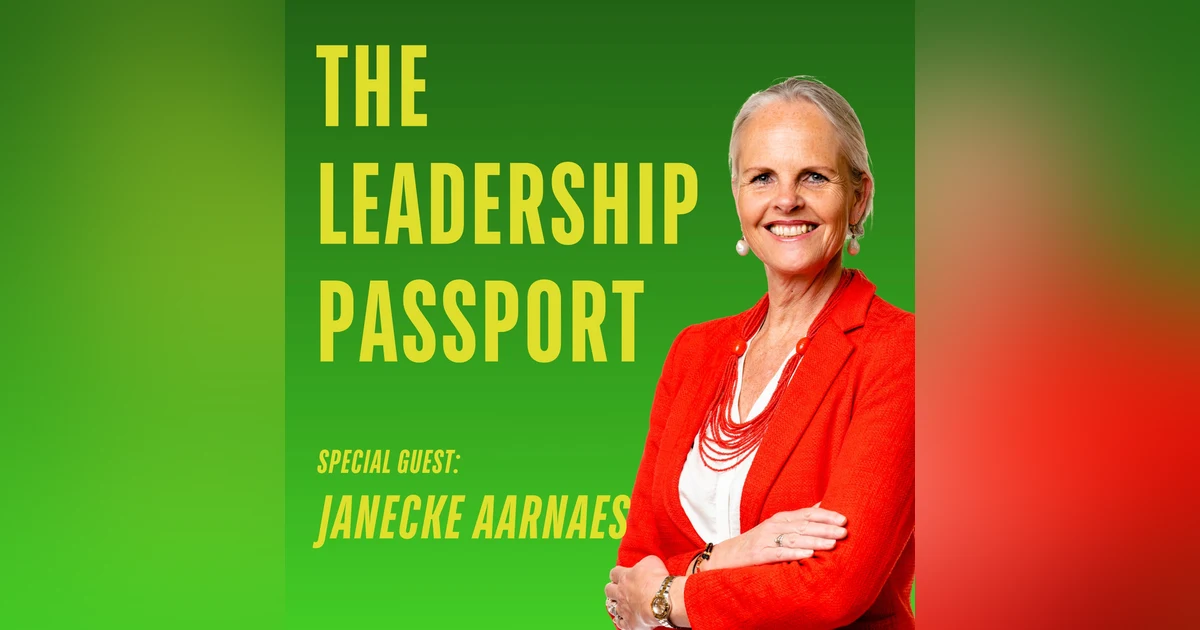


In this conversation, Janecke Aarnaes, Head of School at the International School of Bologna, shares her journey into education, emphasizing the importance of cultural curiosity and understanding in shaping her leadership philosophy. She discusses the role of education in empowering students to become global citizens and the significance of nurturing confidence and responsibility in young learners. Janecke highlights the need for authentic leadership in times of change and her vision for redesigning education to better serve diverse student needs. Ultimately, she expresses hope for the future, driven by the potential of young learners to impact the world positively.
Guest Bio
Janecke Aarnaes is an accomplished international educator with 30 years of experience in school leadership and development. She has held founding head positions for pioneering start-ups and led both large (1200+) and small (-100) schools across Norway, Belgium, the United Arab Emirates, and Italy. Currently, she serves as the Head of School at the International School of Bologna, a 3 programme IB World School.
Her commitment to education is further demonstrated by her extensive service on various boards and commissions, such as the ECIS Board (2015-2021) and the Dubai Future Council on Education. She is presently an appointed member of the NEASC Commission on International Education, serves on the Advisory Board to Evolution International School in Egypt and holds the Vice Chair/Treasurer role at the Association of IB World Schools in Italy.
Takeaways
- Janecke stumbled into education, finding her passion unexpectedly.
- Cultural curiosity is essential for navigating international education.
- Cultural differences exist beyond language barriers.
- Empowering students involves instilling confidence in their voices.
- Students thrive in environments where they can express themselves freely.
- Authenticity and vulnerability are crucial for effective leadership.
- Education should foster both thinkers and doers.
- Redesigning education requires flexibility to meet diverse needs.
- Every child should feel they matter in the educational system.
- Hope for the future lies in the potential of young learners.
Chapters
00:00 Journey into Education: A Serendipitous Path
02:46 Cultural Awareness and Leadership Philosophy
05:42 Language and Cultural Nuances in Education
09:01 Instilling Confidence and Responsibility in Students
11:43 Authentic Leadership in Times of Change
14:38 Redesigning Education: A Vision for the Future
21:51 Hope for the Future of Education
Host
Kevin Fullbrook is an international school leader with 25+ years of global education experience across Australia, China, and the Middle East. As host of The Leadership Passport Podcast, Kevin dives into the stories, strategies, and insights of education leaders from around the world. With a passion for inclusive leadership, student agency, and sustainable school cultures, he brings thoughtful conversations and practical takeaways for educators, aspiring leaders, and anyone interested in the future of learning.
Connect with him on Instagram (@kevin.fullbrook) and LinkedIn (Kevin Fullbrook)
https://www.linkedin.com/in/kevin-fullbrook-33034b8b/
https://www.instagram.com/kevin.fullbrook/
0:05 I'd like to welcome today's guest, Yaneka Arnez, Head of School at the International School of Bologna. Yaneka is an international educator with over 30 years experience leading and Building Schools around the world. Prior to Bologna, Yaneka has held senior leadership roles in national and International School settings across Europe and the Middle East. She's known for being a passionate IB educator and deeply committed to student centered learning, creating environments where learners can think critically, reflect and take action that matters locally and globally. Welcome, Yanika. Thank you, Kevin. I'm very happy to be here with you. Yeah, I'm, I'm so glad we've got some time to to have a chat. I'm really looking forward to it me. Too.
0:46 I'm wondering if you could start a little bit by sharing a bit about your journey in education and what's brought you to your current role in Bologna. Yeah, great. I think when people ask that question, I have a tendency to say that I stumbled into education. It wasn't what I planned. If I go back to when I was in high school and I wanted to work internationally and I went to Paris to study international politics and saw myself in, in an international industry, but not in the, in the international education industry. So during my years of study, I started teaching languages as a side job while I was a student.
1:27 And I loved that. It gave me a lot of experience and pleasure. And it led me to my first permanent teaching job while I was still in my, the master's program. So I hadn't, I hadn't planned on becoming a teacher, but I, as I said, stumbled into it. And then after a little while, I thought, wow, really, this, this really resonates with me. I love doing this. So the idea of going into an international organization or working in, I don't know, politics or diplomacy, which was kind of the idea I had in high school, didn't seem so important anymore. And I had to decide that, OK, I think I'll do this, and then we'll see what life brings.
2:11 And then I ended up being a language teacher for a while, which led me into education. And here I am. So I've kind of never left school. But what a great story. And it's, it's a very familiar story, I think, for a lot of people that have somehow never intended to work in education but have somehow stumbled into it or upon it and just love it and never leave. True, true. And you talked a little bit there about your desire to work internationally and across cultures and regions. How have those experiences since? How have they shaped your kind of leadership philosophy today? They have been fundamental to my own personal development. I I can remember when I was in middle school, I was doodling and I created my own personal logo with the globe. And they above the globe it said citizen of the world and above it it said my name.
3:10 And I thought, I definitely have had this desire to get to know other cultures, to get to know other languages, to understand people from different perspectives since I was quite young myself. And that curiosity has helped me navigate the international landscape because I have fundamentally approached it with that open mind and wanting to know about people, wanting to know about things I am not familiar with and but being curious rather than than skeptical and fearful. And now after several years, I can actually say after decades in international education, I really understand how important that kind of mindset is.
3:56 There's so little we know and so much we can know if we are open minded and interested in finding out about others. And it's absolutely essential to be successful, I think, in the international education landscape. Yeah, I couldn't agree more. And it's it's, I think what I have noticed is those people that are most successful are the ones that have a great sense of curiosity about other cultures and other people. And they're the ones that are most easily able to to navigate it and to to be resilient and overcome challenges that that often come with operating internationally sometimes. Has there been any pivotal moments that you can recall in your career that really shifted the way you approached your role as a school leader?
4:47 I took a headship at Oslo International School in Norway, and Norway is my home country. I had been abroad for many years. I was not intending to go back to Norway. So I chose the school video or the school chose me because it was a perfect match fill if match philosophically. So the country was kind of secondary, but of course it was great from, for myself, my, my children to come back to Norway for a while and be close to our families in that school. A, the school was kind of divided into half. Half had a British background, half of it had a American background.
5:30 Everybody spoke English, of course. And it was the first moment in my life where I realized that the cultural divide is not only language. I mean, it's not language driven necessary because we speak the same language. So we spoke English in the school. And it was a very curious moment for me to really understand that you can have significant cultural differences although you speak the same language and you master the language. Because the biggest cultural challenges were between the two English speaking groups, not between non-native speakers and native speakers. And I think that for me was a fundamental moment because I am very, very curious about languages in general.
6:16 What I taught as as a teacher was languages. So for me to really see this aspect through a language conflict that open really opened my eyes to the nuances of culture. Because culture is not only culture across borders, it's culture within within communities. And this was, I've had several headships after that. So it was very valuable for me to come to that realization quite quite early on that the language we use matters a lot in the way we exercise our role as leaders, of course, as we exercise our roles in general.
6:57 But then to me it I approach it from the leadership lens that I really have to be mindful of the language that I choose to use. Yeah, very interesting. Interesting. And look, just out of curiosity, what languages do you speak? So I, of course, I grew up speaking in Norwegian. That's my, that's my own home language. Then I am very comfortable with English. You can definitely hear that I'm not a native speaker, but I, I feel like a native speaker. I I use English more often than I use my home language. I studied in France after high school, so I had the opportunity to learn French at a academic level. So I would say that I feel as comfortable in French as I am in English.
7:46 I have now been in Italy for three years and I could order a pizza or a cappuccino when I arrived, but now I can discuss politics and meet with parents about complicated matters about student well-being or about can talk about the pedagogy. So I'm happy to say now that I can speak Italian as well. I managed well in Spanish, but I wouldn't say at the same level the same with German. As a Scandinavian we have at least my generation. We we also understand Swedish and Danish and we can speak with each other with relative ES. When I grew up, Norway had one television channel and Sweden had two, and the old Norwegian households had the two Swedish channels. So I watched more Swedish television than Norwegian and that helped access the language.
8:39 I'm sad to say that although I lived five years in the UAE, I was not able to pick up Arabic. And that's my although I should be proud that I speak many languages, I am still bothered by the fact that I haven't been able to learn Arabic. I know some words only and that's my personal ambition. I will learn the language even if I'm not in an Arab speaking country right now. Great, very good, very good. So you talked a little bit about where you are at the moment and that ISB. So, you know, we talk about, and then you reference a little bit before about cultural awareness and you know, part of a lot of schools mission is about developing global citizens and, and preparing students to, you know, positively impact the world after they they leave school. What are some of the things, what does that look like to you and ISB and and your community there? For me, I think this one of the essences of develop, of being able to instill that notion that an individual can have an impact in the world is to really use education as an opportunity to create that confidence in young people. I think it's fundamental that we believe that we have an individual value, that an individual person matters, Your voice matters, your ideas matter. They might be different from other people's ideas and that's why they matter even more.
10:10 So I think the skills that we can give our young people is really what is going to be the the door opener to that better future. And if everybody in education or through education, not in education, but everybody through education could leave, you know, that trace inside of them and and harness that and let that grow throughout their life. I think we really, I do really believe that we have the power through education to help the world be shaped in a better way in the future. Yeah, that's a, that's a really great point. So how do you see, you know, in in terms of instilling though that that sense of confidence or ability in in our students, You know, also how do you go about developing that? Also that sense of responsibility for in them when they leave school that, you know, they can make an impact, they can do something and and they perhaps have an obligation or responsibility to to, you know, make a positive impact. How do you coin to nurture that in our role as educators? Yesterday we had an open day here at school and we had a panel of student ambassadors from our school. You speak to the visitor visiting families. I'm thinking and I, as I said this to them, to the families visiting as well.
11:35 But as an educator, I'm super proud of our school. I can talk to you about our philosophy. I can talk to you about our pedagogy. I can talk about the vision and mission and that this drives everything that we do. It's even more powerful if we allow students in our school speak to you, answer your questions because they have not been trained to say anything. They don't have a script. They will answer from their guts. They will. You'll ask a question they're not prepared for and they will answer. And they got questions like this. So how do you know? They said, you know, how do you know that your voice matters? And listening to our students help me understand, of course, that our mission drives the decisions.
12:19 It drives our pedagogy. And I can see the evidence of that when I listen to the learners, because they talk about how they are allowed to have their own opinion, how they are allowed to express themselves without fear of being judged, how they are allowed to even fumble with their ideas in that safe space where nobody's going to. They're not laughed at. They're not told by the teacher that no, this is not, you know, that's not what the book says because we don't care about that. We care about people being able to reflect. And in this panel, we had, we had students from grade 4, we had students from grade seven, grade nine, grade 11, and we had an alumni. And they all said the same thing, that they felt that this was one of the things that they felt was unique about this school and they had experience from other schools. They had been in non IB schools before. So they drew parallels between other ways of approaching learning and the way we approach learning here. And of course we recognize that International School of Polonia is not unique.
13:26 An IB school will do this. Many schools around the world that are not IB schools will do this. My hope would be that every school would do this. All curriculous. That would be phenomenal. I think then we would have a greater impact. And that must have been a a great sense of pride for you and the team to to witness that. I mean, a lot of schools talk about or struggle with the concept of how do they measure their mission or progress towards fulfilling their mission. I mean, that's something you just a wonderful example right there of, of bringing it to life. All right, So if we talk now a little bit more specifically about leadership, how, how what have you learned about leading schools through change and times of global uncertainty? How is that shaped what you do and how you do it I. Read a book this summer about leadership, about authentic leadership and a colleague gave it to me and told me, Annika, I think you will like this book because I think you will recognise yourself in it.
14:28 And I thought that was, that was a very nice thing to hear before I, before I read the book, because somebody could have given you a book and said, I think you need to read this because I think you need to learn something. You could say you're not doing something, you're not doing well. So of course it was, it was a very nice way of being given a book to read about leadership. And I, I did and I did recognize it. And I think this is maybe whether it's was conscious or not conscious, but being authentic I think is something that I have brought with me since I was in school myself. And I found school to be a challenging place to be.
15:10 I found people to be difficult to trust. I'm talking about my peers. When I was in middle and high school, I felt there was a lot of pressure and I did not know how to navigate that. And with the help of my family, I developed the sense of you just have to be you. You cannot be anyone else but yourself, whether people like that or not, kind of has to be secondary because unless you're true, unless you are honest about who you are, honest about what you know and what you don't know, then you cannot be an authentic individual. So I believe and I hope that I have brought that with me all through my leadership career.
15:54 And the more I read about, of course, the more I've studied leadership, the more I've read about leadership, the more the, the I might choose literature that supports that. But it also helps me helps me feel comfortable that this is this is an important element of leadership. There are so many nuances to being a leader and I can, you know, choose to talk about so many things, but this about authenticity and daring to be vulnerable has been two elements that I have appreciated and believe that I am leading kind of through authenticity. Well. It makes it almost impossible to develop those close trusting relationships unless you are authentic and transparent and vulnerable, especially with with young people, because they can, they will immediately pick up on the fact that if it's you know, if you're not acting and, and you know, if your words don't match your actions in the most basic sense, then you know they will sniff that out very, very quickly.
17:04 Definitely, definitely. So if you could redesign the idea of school from scratch, what are some of the things you would keep? What are some of the things that you would let go of what? What are some of the things you might add? I think in then in my ideal world, it would be very or my ideal school, it would become difficult to combine adults and children in time and space. And when I say that, because I recognize that when we are, we are working, meaning so the educators and the institution, they need to also be able to balance their life outside of school with life inside of school.
17:51 So working hours are important and they do not necessarily I match the ideal scenario for learners because their hours ideally might have been different, especially when you talk about teenagers, I think would have been great for teenagers to have a different, you know, a different schedule coming to school at a different time of the day, for example. But that's so freeing ourselves from time and space is hard, but more flexibility in time and space if we manage to construct something that's tailored more to the different ages. I work in a continuum school than we have one schedule, of course, an hour for some that works really well for others. I think that schedule would have worked better if it wasn't so, you know, if it wasn't one side fits all these ages, but then again, it also has to fit the adults.
18:39 So I recognize there are things that you want to do that you think ideally and philosophically this would work really well in a say in a teenage scenario with middle and high school students, but then some another timing works better for for young children. So my ideal is not always what we should strive for either though. But I think in school in general, having, I've of course been educated myself in a non IB context, now being in an IB education setting, having seen other curriculars and worked in other schools. I, you introduced me also as a passionate IB educator and I am passionate about the IB education. I think philosophically it's a great program. There are lots of things that we need to look at developing further in the IB as well.
19:32 But the idea is brilliant and there are some, there are other educational programs like the Montessori philosophy for example, which is also brilliant. Radio Emilia thinking, I am here in Italy and the radio approach to to self-directed learning is, is phenomenal. So I think in school in general, broader than the International School context and broader than the IB world. I would definitely hope that. Most national programs would change. I think that's where we can have an even bigger impact if national programs move away from the traditional schooling that we recognize from kind of decades and decades and say hundreds, say at least maybe 200 years, to a more authentic student centered learning environment where experiential learning and contextualized learning is kind of driving the the pedagogy.
20:33 If that was kind of a global landscape, I think education as a tool and a powerful tool to change the world would become more impactful. Yeah, and even going back to your the beginning of our conversation when we were talking about cultural differences, even the concept of schooling is really quite rigid and very similar regardless of cultural considerations. You know, it, it looks very much the same in Australia as it does in Norway, as it does in the UK, as it does in the Middle East. Regardless of the, you know, sometimes very significant cultural differences or sleep patterns or work days or anything in that in these different parts of the world. Yet our our school systems are just picked up and and and plunged in and and replicated in that way. I think a lot, I think a lot of countries think about the, the, you know, higher education sector as the, as kind of the measure for how education lower, lower down the ages needs to be. But I do believe that the also higher education has proven that they are open, you know, they are admitting students who have had another education path.
21:49 So I would say we shouldn't use that as an excuse for not changing our systems because I believe that they, although university and college education might not have changed significantly from the outset, I do think that generally there is a much higher acceptance to admit to, to accept students to higher education who have had a completely different education path in their younger years. So I think we should really dare to revolutionize the way we approach learning for younger children. The point would be that they are equipped with the tools that they need, the skills that they need to have to be successful individuals. And everybody shouldn't go to university and college either because the world needs more than academics.
22:33 We need doers, we need academics. I'm not saying that we don't, but we need a combination of of thinkers and doers. And 100%, yeah, 100%. So look finally, just to to wrap things up, what gives you hope right now when you think about the future of education and the next generation of learners? I think every morning I welcome our learners outside our gates and seeing the bright, beautiful faces of young people who have hope in their own eyes, that gives me hope. And the good thing is that when when we talk in, you know, depending on what conversations we have today, that can be quite depressing.
23:17 They can be quite bleach because the world is very close to us in many ways and then yet very far away in other ways. But we are Privy to a lot of information that can be heavy to carry it. It can seem like a heavy burden and we think, how can you know, how can we possibly be hopeful when when things seem so, so terrible around the world? But then you see young people growing up and they need to, they need to be hopeful. They are, they play, they have fun. Life is still good in many, many places. And in many places where life is not good, children still have hope. And that gives me hope as well. So the going back to what I initially said, if we can manage to help every single individual or every child in our education institutions feel that they matter, that gives me hope because if they matter, they can impact the change. Wonderful.
24:14 Well, that seems like a great place to, to leave things. So thank you so much for your time today, Yaneko. I really enjoyed chatting with you and and thanks so much for sharing your your thoughts. Kevin, it was a pleasure to be invited. Thank you very much for having me here today. Thank you. Thanks so much for listening to the episode. If you enjoyed this conversation, don't forget to subscribe, like, follow, etcetera. Drop a comment below to let me know anything you'd like covered in upcoming episodes or suggestions for future guests. You can also connect with me on Instagram and LinkedIn.

