Simon Lightman
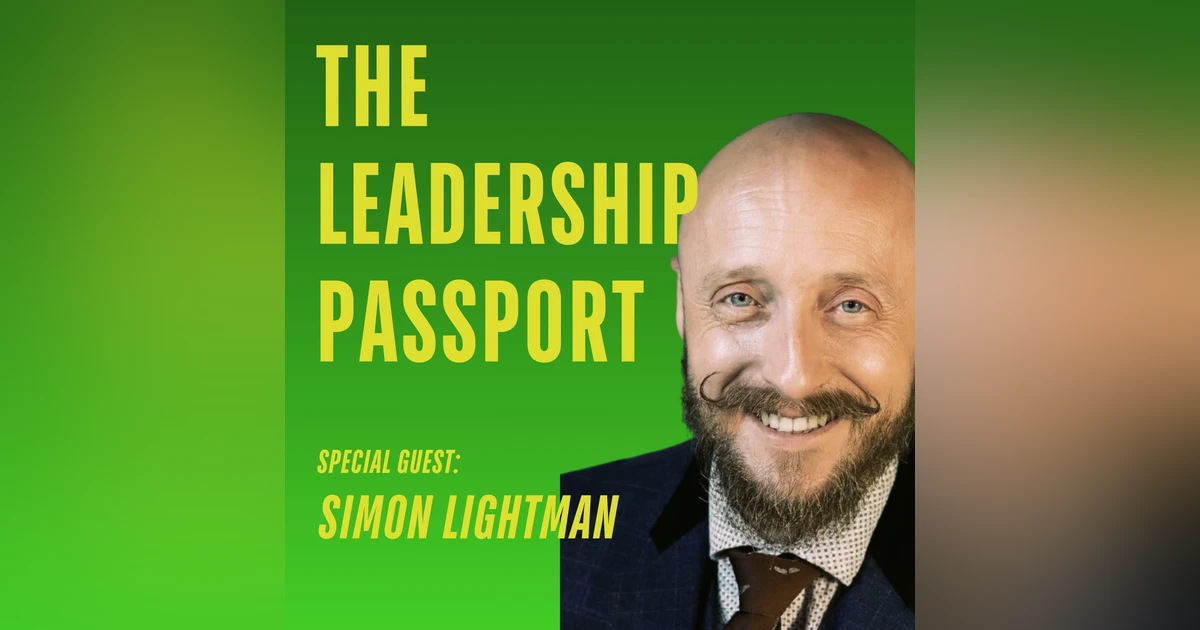
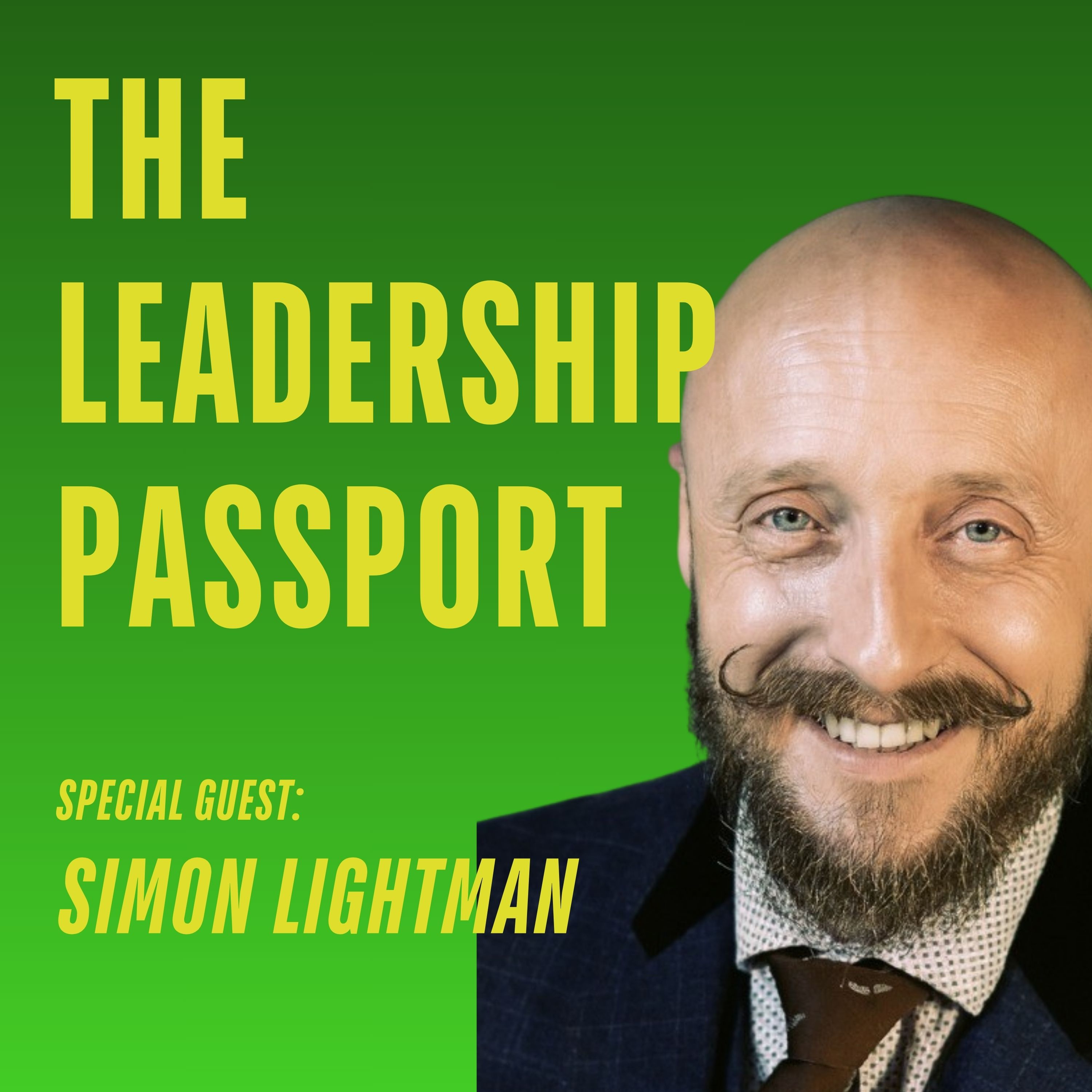


In this conversation, Simon Lightman discusses the nuances of leadership within education, emphasizing the distinction between instrumental and transformative leadership. He explores the importance of purpose, integrity, and compassion in leadership, and how these qualities contribute to creating flourishing educational environments. Simon shares personal insights on unlearning ineffective habits and the significance of reflective practices in leadership development. The discussion also touches on the challenges of balancing accountability with deeper transformational work in schools.
Guest Bio
Simon is an educator, writer, and systems thinker whose work explores how learning can respond to the moral, ecological, and philosophical challenges of the twenty-first century. He is Co-Chair of SEEd (Sustainability and Environmental Education) and founder of the City of London Youth Natural Environment Board, a youth-led initiative influencing sustainability leadership across the City’s schools. His work connects philosophy, policy, and practice, helping educators and young people design learning systems that are ethical, resilient, and future-ready. Simon’s writing and public scholarship focus on transformation, flourishing, and the renewal of education as a moral and civic practice.
Takeaways
- Leadership is about purpose and moral intention.
- Transformative leadership focuses on who we are becoming.
- Trust is built through relationships, not positions.
- Clarity in leadership is about orientation, not control.
- Flourishing schools create an atmosphere of meaning and curiosity.
- Integrity is a daily practice that aligns values and actions.
- Compassion involves giving attention to what needs to be seen.
- Unlearning ineffective habits is essential for growth.
- Personal reflection is key to effective leadership.
- Flourishing is more than performance; it's about the overall experience.
Chapters
- 00:00 Introduction to Simon Lightman
- 03:33 Instrumental vs. Transformative Leadership
- 07:10 Experiences Shaping Leadership Philosophy
- 10:01 Balancing Accountability and Transformation
- 14:23 Clarity Amidst Complexity
- 16:54 Leadership as a Practice of Becoming Otherwise
- 19:22 Unlearning Ineffective Leadership Habits
- 21:20 Integrity and Compassion in Leadership
- 24:32 Flourishing vs. High-Performing Schools
- 29:18 Personal Practices for Reflective Leadership
- 32:45 Designing a Leadership Development Program
Host
Kevin Fullbrook is an international school leader with 25+ years of global education experience across Australia, China, and the Middle East. As host of The Leadership Passport Podcast, Kevin dives into the stories, strategies, and insights of education leaders from around the world. With a passion for inclusive leadership, student agency, and sustainable school cultures, he brings thoughtful conversations and practical takeaways for educators, aspiring leaders, and anyone interested in the future of learning.
Connect with him on Instagram (@kevin.fullbrook) and LinkedIn (Kevin Fullbrook)
https://www.linkedin.com/in/kevin-fullbrook-33034b8b/
https://www.instagram.com/kevin.fullbrook/
0:05 Welcome to the Leadership Passport. I'd like to welcome my special guest today, Mr. Simon Lightman. Simon is an educator, writer and systems thinker whose work explores how learning can respond to the moral, ecological and philosophical challenges of the 21st century, is Co Chair of SEED Sustainability and Environmental Education and founder of the City of London Youth Natural Environment Board. A youth LED initiative influencing sustainability leadership across the city's schools is what connects philosophy, policy and practice, helping educators and young people design learning systems that are ethical, resilient, and future ready. Simon's writing and public scholarship focus on transformation, flourishing, and the renewal of education as a moral and civic practice.
0:49 Welcome, Simon. I mean, it's always slightly daunting when you hear your, your sort of bio read out in, in, in that way. I always have a little bit of imposter syndrome, you know, I think that's a healthy thing to have. But it's an absolute pleasure to to be here, Kevin, and have the opportunity to to speak with you today. That was great to have you. Thanks so much for your time. Now you were you were sharing, we were having a bit of a conversation before, but you shared with me before. You're an old school hip hop fan who still raps a bit on the side much the embarrassment of your daughter. Tell me a bit more about that. I mean, I don't know if there's that much more to say. Like lots of 42 year old men, I am a teach, I'm a, I'm a teacher. But in in my heart, I'm a frustrated, you know, music star, rock star, hip hop star.
1:38 Now I like all types of music. I've always been very much inspired by music in every form. But I've always enjoyed hip hop, old school hip hop and actually a few years ago and I've always done some writing and, and played, you know, I play guitar and I write some songs. And then a few years ago I said to myself, you know, you know what? I'm just going to follow one of my childhood dreams and start to record a few tracks and bits and pieces. Unfortunately, as is often the case with work and family life, etcetera, etcetera, I don't necessarily have as much time as possible to, to actually do this stuff. But occasionally I do go down to my little bedroom studio and, and do some recording. And then my teenage daughter is kind of horrified at the sound of her, you know, middle-aged dad rapping. You know, you've got to, you've got to live your dreams, man. I think that's important.
2:33 Yeah, and and that's your job as a dad as well. That's an important part of the role is embarrassing your children. So it's it can't be overlooked. I, I, I think this is, this is an important part of the, of, of the, of the fatherly role. Definitely, definitely. And not taking yourself at not a more serious point, not taking yourself too seriously and demonstrating to your kids that you can inhabit different personalities. You know, I think part of my own, you know, leadership journey has been learning how to inhabit the different elements of myself and see those things not as mutually exclusive, but as part of who I am. And I try to bring that to, to, to everything I do actually, that it's OK to be to be yourself, that you don't need to, to put on a, a certain persona in order to inhabit certain spaces.
3:23 And you know, that is, that's something that I've learned at great cost. And you know, for what it's worth, that little bit of wisdom is something I'd like to pass on to my own kids and, and all the young people that I, that I work with, actually. Well, that's a, that's probably a really good segue then into talking about some of your work. And you know, you describe some of your work as exploring the distinction between instrumental and transformative leadership. So I wonder if you could start by sort of unpacking that a little bit, what that means and and why you believe that distinction matters so much in schools today? Yeah, No, that's a great, that's a great question. I mean, my, my focus is very much on, on leadership within the education sector. But I do believe that the underlying principles apply to, to leadership more generally.
4:09 And that distinction between instrumental and transformative leadership is about the deeper question of, of purpose, I guess. I mean, it's about the question of what is leadership ultimately for? If we talk about from an education point of view, it's about this idea that, yeah, there's two fundamentally different views of education as there is of many different areas of, of human endeavour. You know, 1 is about education as, you know, preparing for people for the way the world is, and the other is about forming people for the way the world ought to be. So, you know, the 1st is just about us adapting, existing within the existing systems, whereas the second is, is more about, it's about transformation, it's about cultivating the imagination, the discernment, and you know, not to get too heavy on it, but the moral courage to renew those systems.
5:06 To my mind, linking back to your question, instrumental leadership is, is about that first view. It's all about leadership which privatises, you know, efficiency, clients, performance. It's about sustaining the present. I, I hate to say it, sustaining the status quo. Whereas transformative leadership is, is about that second paragraph. It's about leadership that is about about purpose, about moral intention. It's about leadership, which is about, you know, who are we becoming through our own leadership and who are we helping others to become through that leadership? And what type of ethical and, and I guess relational atmosphere are we are we trying to control, you know, create?
5:49 I mean, in, in my own life that's come to play in in various ways. I've seen it where with my work with the City of London Youth Natural Environment Board, with my work as the Co chair of SEED, where transformative leaders start to see it as a question of of how do I put this, I guess of renewal rather than just delivery. Look, one of the major issues you and I both work in in education is that schools are often seen as factories of attainment. But to my mind they are much more than that. That is 1 aspect of them.
6:30 But they're also living systems and all living systems are capable of change and evolution. So a transformative leader is someone who, who holds that wider view. They, they're someone who understands the, the decisions they make on, on policies, on structures, you know, the conversations they have. We like to reinforce the way the world is or will contribute to helping us to expand our capacity to imagine the world differently. I guess that's a very, very long answer, but I hope that kind of captures a little bit of of what I what I think on that.
7:15 Yeah. And I think we'll we'll get into that a little bit later in terms of the the practicalities and realities of that because like you said, we both both work in education and we work in busy schools. There's a lot lot happening and you know, how does that really where the rubber hits the road, What, what does that look like? But wondering before we kind of get to that, what experiences or observations in your own career have most shaped your thinking about this? OK, so. Comes to mind, yeah. Yeah. I mean, I often come back to this idea. I think of education, I think of leadership within education, leadership more widely as how do we understand questions of, of being questions of what we are becoming rather than what we're just doing. So, you know, I don't want to get too heavy into the philosophy of this, but it's about ontological questions. It's about the stance we take towards, towards others and, and towards the, towards the world.
8:21 You know, earlier on in, in, in, in my career, I was, I tried to ape others, you know, like many of us do we, we look for the sort of indicators around us and we try to, you know, copy what we think is the, the best way to do things. And I was really focused on, on systems, on strategies, and I really thought that innovation was all about clever design. You know, I still, you know, clever design's still important, but actually, you know, through the civic work I've done and particularly through, through the youth LED work, I've, I've realised that actually it's more about how we are present, right?
9:05 It's about how we show up. So the best leaders from, to my mind, are the ones who they create trust, right? And they create trust because they're coherent and their integrity and their, their manner of being just radiates through the school and they understand that their, their power doesn't come from position. It comes from relation. So, you know, when you come across that type of leader, who is, who's grounded, who's self aware, who, you know, going back to the thing I was saying earlier, who's happy with the different facets of their personality and isn't, you know, not to be put to belong to a point on it, but isn't carrying heirs and graces.
9:48 They're not trying to just enact control in order to maintain the system. They're trying to look around themselves and see like, what can I do to help everything become the best it can be? And that's a very different way to approach things. So how do you then kind of reconcile that tension or friction between accountability measures like grades and inspections and performance metrics, and that's some of that slower, deeper work around transformation? That's, that's a good question. And it's I, I honestly haven't, it's one that I, I struggle with, but a lot of the work I'm trying to do, especially on policy stuff, which I'll come to later, is trying to make sense of that and, and position through a different way of that.
10:37 So, yeah, first of all, it's important that accountability is not, is not the enemy, right? You know, grades, inspections, you know, performance, etcetera, that that's all necessary. It's, it's the way it's shaped, it's the form it takes. So the problem is not accountability itself, but accountability systems, which are all about, you know, optimising things rather than actually forming things. And I think this goes actually to, to a little bit of a, a deeper issue. So education has imported a lot of the managerial logic from other industries.
11:20 You know, although that's not necessarily all bad. You know, a lot of schools etcetera are businesses. They have to generate, you know, value, they have to generate profit or they have to generate, you know, money in order to maintain themselves, etcetera, etcetera. Or even state schools still need to generate, you know, value for the state and value bang for the buck for the taxpayer, etcetera. But the the issue is they just like imported this managerial logic, which is all about output rather than relationship. And I don't think that's fit for purpose because when you have like accountability, that's all about fear and, and, and competition, it just creates a culture of compliance.
12:03 Whereas education, and I would say all industries actually, they, what they really require is like trust and, and talking dialogue, right? So I guess coming back to schools in a real practical sense, so we don't lose the thread of your question, it's about what actually counts as evidence here, right? So, you know, the data matters, grades matter, inspection outcomes really do matter, The performance indicators are really important. We need good data. We need to be able to illuminate all those different points, etcetera. But we also need different types of testimony. We need a space to allow for stories of learning, reflective portfolios, actual acted upon feedback from students in the community evidencing that collaboration.
12:57 I guess it's about that kind of shifting culture. So often what I've talked about is this idea of narrative evaluation. So looking not just at, you know, what's been achieved tick box, but what has been learnt, what capacities have grown, what new possibilities have opened up. So, yeah, I mean, I guess that that's what it comes down to for me, really. Yeah. So when you're talking there about really, I guess in some ways more complex way of looking things, more nuanced way. And we were talking before about, you know, shrinking attention spans and how people consume information or music or whatever it is these days, what that looks like. So how do you balance those two things? How do you embrace that kind of complexity and new ways of doing things without losing any clarity, especially when people, communities, whoever it might be, they would, they want a sound bite, they want something simple that's easy to consume and something to be really nicely wrapped up. Yeah, I mean, it's really hard, isn't it? Because people want clarity, but good leaders are able to provide clarity whilst also holding on to complexity, right. So yes, people want clarity, but
14:28 it's not the role of leaders, to my mind, to to simplify reality, but to create the space to make that complexity liveable. So there's lots of different, you know, competing stuff going on in, in any school. You know, there's people who are striving for excellence and, you know, often academic excellence. There's people who are waving the banger for, for equity. There's people who are, you know, really, you know, focused on well-being others who want to ensure that the schools are accountable. All of those things coexist at any given time. And you know, this, that's literally what you deal with on a daily basis, I imagine, right.
15:09 So the idea that you as the leader are going to solve that, that you're just going to be able to come in, cut the wheat from the chaff and just, you know, do whatever is it's actually, it's just like a shallow certainty. So I would say clarity in this context, it it's not about control, it's about orientation and it's about making that thinking visible, you know, showing people what the guiding principles are for the decision making, letting people understand how the trade-offs are reached, involving all of your different stakeholders in that sense making rather than just announcing the the conclusions to it.
15:58 Now, that doesn't mean that you, you know, defer your responsibility. Leaders are are paid to lead that what people do not want is leaders who just have the mantle of leadership, but constantly are delegating and creating, you know, endless discussion forums, etcetera. Because people do want somebody to come in and say, OK, this is the vision, this is what we're working towards. But I think that can be done whilst also well that the best way that's done is when it's enacted, but in a way that people actually see what the principles are behind that.
16:38 And you know, I've, I've tried to do that in my sustainability work, particularly the world of sustainability is often about ambiguity. But you know, there's got to be purpose, right? Yeah. I think, I think that's kind of, yeah, that those are my sort of overall thoughts on on that. So you used a phrase before leadership as a practice of becoming otherwise. Wondering if you can talk a little bit more about that and what that means. Yeah, I mean, I'm always a little bit, you know, careful around these type of highfalutin phrases. But I think it is important, you know, you talked about clarity and leadership. People like something which can speak to a certain reality.
17:21 And I've found that a lot of people have actually found that phrase of becoming otherwise quite engaging. So I guess it's about the, both the personal transformation and, and the collective change, right? And to my mind, those two things are, are totally inseparable. So leadership, which is about becoming differently, becoming otherwise is about first of all, understand it's, it's, it's not a position, it's a, a process of formation and reformation. And on the personal level, it's about letting yourself evolve to, to look at your own habits, to look at your own assumptions, to look at the attachments that you've made that maybe once used to make sense, but now constrain growth.
18:15 I mean, in my own life, I, I found that Stoic philosophy has been really helpful in that sense of helping me to sort of have opportunities to cultivate that reflexivity to, to think about, you know, how am I approaching, how am I showing up at the collective level? It's about, you know, as a leadership change changes their stance, whether right or wrong, the whole culture shifts because we do live in a society and human need is that we look towards our leaders. So, you know, it's not just about this simple thing of like our self improvement or, or changing my, my personality.
18:57 It's about seeing yourself as part of a wider system of change and it's about leading with people rather than leading over them. That's what I would say. So how do we go about unlearning some of those bad habits, perhaps that, you know, keep us tied to some of those, you know, structures and cycles and processes that perhaps aren't as as helpful as, you know, to become the types of leaders that that people want to become? Well, how do we go about unlearning some of those things? I think it's about that that process, right? Of first of all, having the willingness to see yourself as in the process of of becoming of understanding that true power and true positive influence in the world doesn't come from you know the title you've you've gained or the. Authority that is conferred upon you by the system that you you operate in.
20:06 But true power comes from the willingness to relate to the world as you are and to see yourself as someone who is striving and to then see others as people are also striving. And it doesn't mean you, you shy away from the hard decisions because in reality, those decisions have to be taken in order for, you know, the collective good often or even the individual good. But it's about understanding that if you, especially if you are wise in your as a leader in choosing your team, then hopefully you've chosen people around you who are on that same process of becoming.
20:54 And your job is to to nurture them to become the best they can be and to add their their part to the to the greater whole. Interesting. So I think I, I think through our conversation we have, I think some shared, you know, interest or, or connection to the concepts of integrity and, and compassion. How do you see those as practical leadership capacities rather than abstract ideals? Integrity and compassion. So, yeah, I mean, integrity, a lot of what I'm talking about is, is integrity is the word that sums it up, right? Compassion.
21:35 These are words that, you know, often in our culture, they're like reduced to just just just be sentiments, right? He's compassionate. Oh, he or she has integrity. But they're not just sentiments, they're disciplines. To have integrity is to have a daily practice of integrity. To have compassion is to actually have a daily practice of fomenting compassion for all things. And often that means pushing yourself to have compassion for those who may be you do not automatically feel compassion for. So, you know, they're not just abstract stuff though, because integrity is about is about alignment, right? It's about what you say, what you value, what you do. You know, in a school, that's, that's about the decisions, it's about the language we use, that's about the policies we have, the practice we have all pointing in the same direction. So integrity and to be seen as having integrity is absolutely crucial to positive leadership because people see when word and action diverge.
22:57 It's not about perfection because I said earlier that it's totally appropriate for the leader to stand up and name the process and even to speak to the truth of when maybe they haven't had the level of integrity that they would want to have. But it's about having that, that congruence and trying to bring those things together. Compassion's an interesting 1. So I mean, I, I see compassion about like the idea of it's, it's giving attention. So going back to what I was saying earlier, it's this idea of giving attention to what needs to, to be seen, right? So if I have compassion for you, it's my ability to to see you, to perceive your experience and to respond in the right way proportionally to you.
23:48 So as a leader, I'm not going to lower my expectation, but I'm going to, I'm going to humanize it. And I'm going to have compassion for you as a human. And I'm going to make you feel seen. I'm going to make you feel valued. And I'm going to help you to see that this is a space where where empathy and and your value is, is paramount. Very good. Now I I saw something the other day, it talked about someone referencing a school or an institution as flourishing. How is that the same or different to a school that's high performing or a high quality school or a well regarded school of a school as flourishing? Is there a difference and how would you define that? Yeah, no, the word flourishing, you know, it goes all the way back to, to ancient Greek philosophy, you know, Aristotle speak spoke about eudaimonia and the idea of, of us flourishing. And the language is very popular at the moment. There's organizations such as the the Harvard Flourish Network.
24:59 We do some really interesting work looking at flourishing paradigms. I've actually got a, a, a book chapter coming out with Bloomsbury quite soon, which is going to be looking at a set of indicators called the global flourishing goals. And my chapter is going to be looking at how transformative sustainability education can enact those, those flourishing goals. If anybody's interested, I, I recommend you, you, you check out the Harvard stuff. But I mean, flourishing is different to performance because performance is just a metric. And flourishing is not a metric. It's an atmosphere. So it's about what does it feel like to be within complexity?
25:46 You know, a flourishing school it, it doesn't mean it's a school without difficulty, but it's a school where there is going to be challenge, but that lives side by side with meaning. So, you know, if I'm in a flourishing school, then I'm going to feel it in the corridors. I'm going to see feel that curiosity in the classrooms. I'm going to feel that generosity in meetings. I'm going to, you know, listen in or hear conversations in the staff room which are really honest and, and open. It needs to be practical because that type of flourishing doesn't happen when people are are run down and depleted.
26:32 You know, if people are are exhausted, if people are alienated, you might get a performing system, but it won't be a flourishing system. And I would say that actually going back to the original stuff we're talking about, often we see institutions, we see schools which might be high performing, they might get excellent results, but actually they're not flourishing and they're not helping people within them to flourish or society to flourish. Because people may come out of those institutions with, you know, great grades or, or whatever, but they might be really depleted and they might not have actually found a way to understand how those grades connect to any sense of deeper purpose or, or meeting.
27:21 So you know, you've got to look at everything. You've got to look at the timetables, you've got to look at the workload models, you've got to look at how many meetings you're having, the rhythm of those meetings, the decision processes. You know, are they, are they helping to support people to function well? Are they are they not? But it's not just about how people feel because it's also, and I think this has come through in a lot of my answers. It's it's about and I don't want to be too heavy-handed, Kevin, but it's, it's, it's about morality. It's, you know, the inner life of the institution has to match the outward mission. So it can't, you know, schools are very good, like lots of institutions are putting this very great information on their websites, etcetera. But you've got to ensure that what's happening inside the lived experience matches that.
28:14 So the leaders need to to to create the conditions for that. And they need to, they need to Createspace. So you need time for reflection. They need to recognise people's contributions. They need to foster staff, agency, student agency, the participation of the community. And it's through those things that an organization becomes a flourishing organization that's actually renewing itself and going to have long term vitality and long term cumulative answer. This sounds really high for losing, but like long term cumulative good for all the individuals in there and for the society and for the whole world of which, you know, especially for schools or any educational institution, I have a really important role in forging a better world.
29:13 So, yeah, I mean, flourishing is is a lot more than just yeah, performance, definitely. So taking that a couple of steps further and I guess maybe focusing now a bit more on personal practices and and reflection, what are some practices and disciplines that help you to stay grounded in this more sort of reflective space and and mode of leadership? Yeah, Do you know what? I am totally honest. I am still on that journey. Find it always fascinating to try to sit with myself and see my own natural energy. I'm I have very high energy.
29:58 I'm very highly motivated, highly passionate. I have a busy job, lots of other projects going on, I've got family life to manage, et cetera. But what I do is one of my core disciplines is to to wake up early and go to the gym. I find that that physical exercise and the, that moment of quiet is really, really important to quieting in my mind and helping me to think through a lot of the ideas I have in, in my mind.
30:46 I like dialogue as well. I don't have huge amounts of friends like many 42 year old men, but I have a, a few, you know, good friends. And with those good friends, I like to, to talk about things. I just read something actually yesterday about this lady who just gave up on small talk and her new approach to like going to events and stuff was to ask people more meaningful questions and then get around the small talk. And I actually thought it was inspired because I, I find small talk really difficult. I don't like talking, you know, if I go to any of these events and people talk about the weather or, or anything else, I find it really difficult to sort of talk about those things.
31:29 And also, I mean, I guess the last thing is, is nature. I'm very blessed to live in, in Surrey. We have beautiful nature here, but wherever I've lived in the world, I've always loved to connect with nature. For me, and this goes back to actually my teaching practice, I mean, all my work is all about sustainability and regeneration. And I'm always talking to people about how we need to get young people to connect with nature and that people are never going to care about something that they don't actually inter interact with. So I make an effort to go out into, into nature, whatever that means.
32:14 Often that means running because I quite like going for a run. But yeah, I guess those are those are the things I, I kind of do. I like to you, I mentioned my music. You know, I like to, to listen to music. I would like to find more time to play guitar, but that's very difficult with everything else going on. There is only so many hours in the day, isn't there? Yeah, exactly. Exactly. Can't do it all. So if you could design A leadership development programme from scratch, what would be the one experience every participant must have to truly get it as a part of that? OK, that's that's a good one. If I could design A leadership programme from scratch, what would everybody, everybody need?
32:57 Do you know what everybody needs? Everybody needs to go into a system where who they are, what they are, etcetera isn't recognized. They can't control it right into a context where their authority in other places doesn't confer them any influence there and to humble themselves. So, you know, if you are a high flying education leader, let's say you need to go to a non affiliated youth board, something like the City of London National Environment Board.
33:45 And you used to sit with those young people and, you know, listen to what they have to say and understand that in those spaces, it's all about consensus and consensus has to has to be earned. So, you know, what we found with the youth board often is that adults often rock up with with a strategy, right, Which is fine. You know, they have something they want to do often, you know, well meaning, but they often will leave with with questions. So I think from that, they see that their leadership is it's, once again, it's not about them persuading people, it's about their relationships.
34:33 So yeah, that's what I would say. Everybody, if I was going to have that leadership program, should have an opportunity to identify a place where they need to go into where they wouldn't have control and live within that space for a little bit and see how that influences how they see what leadership is about and what they think is important in terms of how you lead people together through consensus. Interesting. All right, so a couple of quick questions to wrap things up then your favorite book on leadership? Whoa, my favorite book on leadership. Well, I, your, your listeners are going to hate me for this one.
35:27 It's very, very cliche, but I'm going to say Marcus Aurelius Meditations. That is, for me the greatest book on on leadership, which I always come back to. Seneca's pretty good as well. But I, yeah, I like, I like my, I like my, I, I, I like going old school, very old school, as old school as possible, back to the ancient Greeks. But Marcus Avellius, he he's just such a fascinating figure. And the Meditations are so insightful. And it's incredible how someone could have been writing in such a different paradigm, right, Kevin?
36:13 Such a different time. But the truths he speaks to are eternal, and if you read it with an open mind and an open heart, you can get wisdom from there. So, you know, a lot of Stoics talk about the idea of finding your mentor and the idea of how you flourish as an individual is by identifying mentors in your life Who embody what you believe flourishing to be, right? Embody the virtues, embody these characteristics, but it's not necessarily that you have to find them in lived individuals.
36:56 You you should try to look for those people and actually talk to them. But you can also find them in in books And you know, Marcus Aurelius, he's like, I don't know, he feels like a confidant. Like I can go back to that book and I can like, I can't be in dialogue with him. Not yet anyway. I'm sure somebody somewhere has made some sort of AI Marcus Aurelius chat bot. You can chat to chat to Marcus, but I haven't looked for that yet. But yeah, that's, that's the book that stands out for me. I would say yeah. Amazing. And maybe this this you might have the same answer to this question. A leader, past or present, you admire.
37:40 Wow, I mean, yeah, I mean, I guess so many people who stand out. Wow. Where do I where do I even begin? A leader past for present who I admire. I guess I I even though this this is slightly controversial, I because obviously his position was he was a Roman emperor. I do admire Marcus Avenius. He was a, you know, a fascinating, you know, figure who did a lot of amazing, amazing things. There was, there was somebody actually, I used to live, I used to live in Peru for a very long time and for over 10 years, my wife at Peruvian, my kids were born in Peru. And in fact, I would say in many ways, Peru was one of them is formative parts of what was the most formative part of my my life.
38:41 A lot of the lessons I learnt about who I am, how I think the world functions, etcetera, etcetera, come from Peru. And there were certain figures that I came to learn about through popular Peruvian culture that I found really, really fascinating. There's one lady, what's her name, her name, her name is, she was from this barrio called via El Salvador. She was called Maria Lena Moyana, that's it. And she was an Afro Peruvian community organiser and she, she did a lot of work for, for women's rights and for fighting against, against poverty, etcetera, at a time when, well, society was not, shall we say, not so open to, to 1 giving a damn about people in poverty and definitely not giving a damn about women in poverty and definitely not giving a damn about Afro Peruvian women in poverty. And her story is really, really inspirational and her her sort of ceaseless leadership and the way that she articulated herself to her community and worked with her community to create a sense of shared purpose and a sense of, if you look at her story, a sense of pride and place right
40:12 in who we are and what we can bring. It's really humbling. So yeah, I guess 2 very different, different characters there, but both embody leadership in, to my mind, what good leadership is all about. Amazing, All right. And finally, best advice you've ever received. Best advice I've ever received. My word. What is the best advice I've ever received? OK, I'm going to get, I'm going to. Yeah. OK, I'm going to speak, speak the truth here, which I didn't think I'd be talking about this. I don't usually share these type of personal things that much, but sometimes I feel compelled to do so. The best advice I ever received was from my grandma on her deathbed.
41:05 I was 16 years old. I'd seen my grandma a couple of weeks before. She was healthy and happy and like many old people, older people, she took a full and she deteriorated quickly. So 16 years old. We drive through the night to London and we arrived at the hospital and it's clearly obvious that my my grandma's probably not going to say see the night through. And she quotes Shakespeare to me and it's almost her final words were all the world is but a stage.
41:46 And the men and women, many players, they have their exits and their entrances and one man in his time plays many parts. And I've come to understand that in many different ways as I've got older. I think for a long time, Kevin, I saw that as being about performance. You have to perform these different roles, right? But going back to my original thing I was saying to you about being self aware and being happy with the different facets of who you are. I think the best advice that I ever got was that because it helped me to understand that we will all play different roles and we need to code switch into those different places. But we need to do that from a space of authenticity. And when we are authentically ourselves and we show up with authenticity and we are willing to make ourselves vulnerable with others and show ourselves as what we what who we are, then I think that's when the magic happens. That's when great stuff happens, great ideas, great innovations, great projects, things that contribute to yeah, to to that, that word to, to making everybody flourish. So yeah, that's the that's the best advice I ever got from my grandma.
43:17 Well, thanks so much for sharing that. I, I, I really appreciate it and that, that seems like the perfect place to, to leave it. So look, thank you so much for, for joining me today, Simon. It's been lovely to chat with you and thank you so much. That's been such a pleasure. Thank you so much, Kevin. I really appreciate the opportunity. Thanks so much for listening to the episode. If you enjoyed this conversation, don't forget to subscribe, like, follow, et cetera. Drop a comment below to let me know anything you'd like covered in upcoming episodes or suggestions for future guests. You can also connect with me on Instagram and LinkedIn.

